
Garage Door Springs
Garage door springs counterbalance the weight of the door so it can open and close with far less effort. When the spring system is correctly matched and balanced, the door should feel controlled rather than excessively heavy and the motor should not be expected to lift the full dead weight of the door.
We inspect and replace failed or worn torsion springs and tension spring systems, while also checking the cables, shaft, bearings, brackets and door balance that work with the springs. A broken garage door spring is replaced rather than repaired. The surrounding lifting system should also be checked so the replacement spring works correctly with the cables, shaft, bearings, brackets and door balance.
Garage door spring inspection, replacement and balancing across Gauteng.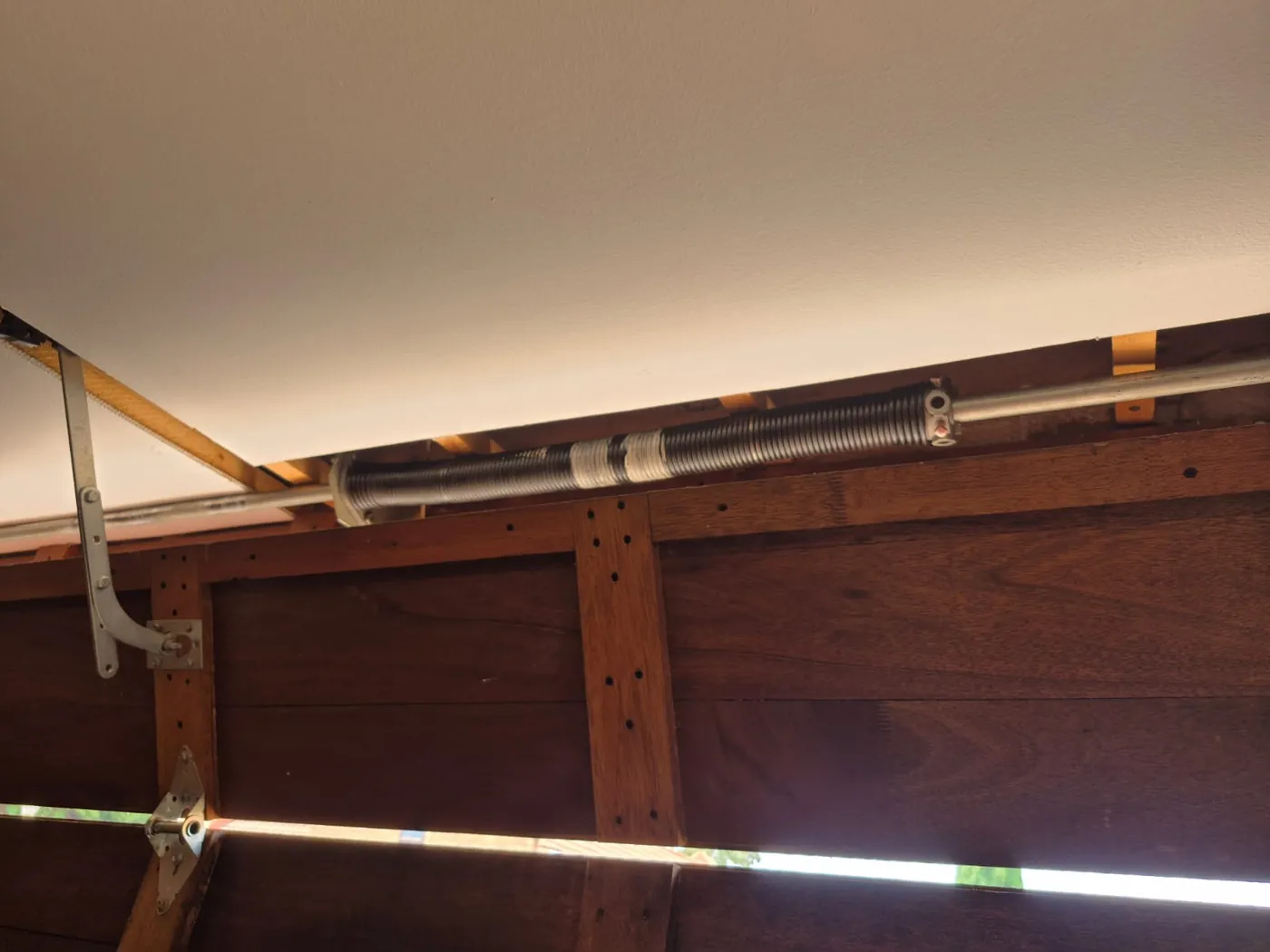


Why garage door springs are so important
A garage door can be heavy even when it feels easy to lift by hand. The spring system stores and releases mechanical energy so the effective lifting effort is reduced as the door moves. This balance is what allows the door to move in a controlled way and helps protect the motor, cables, rollers and structural hardware from unnecessary load.
The door itself creates the load that the counterbalance system must offset.
The spring system stores and releases energy as the door moves.
That spring force is transferred through the door's lifting hardware.
The door should move without feeling excessively heavy or uncontrolled.
The motor guides movement instead of fighting the full dead weight of the door.
Do not loosen spring fasteners, winding hardware, shafts, cables or bottom brackets without the correct tools and training. If a spring is broken, a cable has come off, or the door is hanging unevenly, stop using the door and arrange professional inspection.
Torsion springs and tension springs
Garage doors can use different spring arrangements depending on the door design and lifting system. We refer to the two common categories as torsion springs and tension springs.
Mounted around a shaft
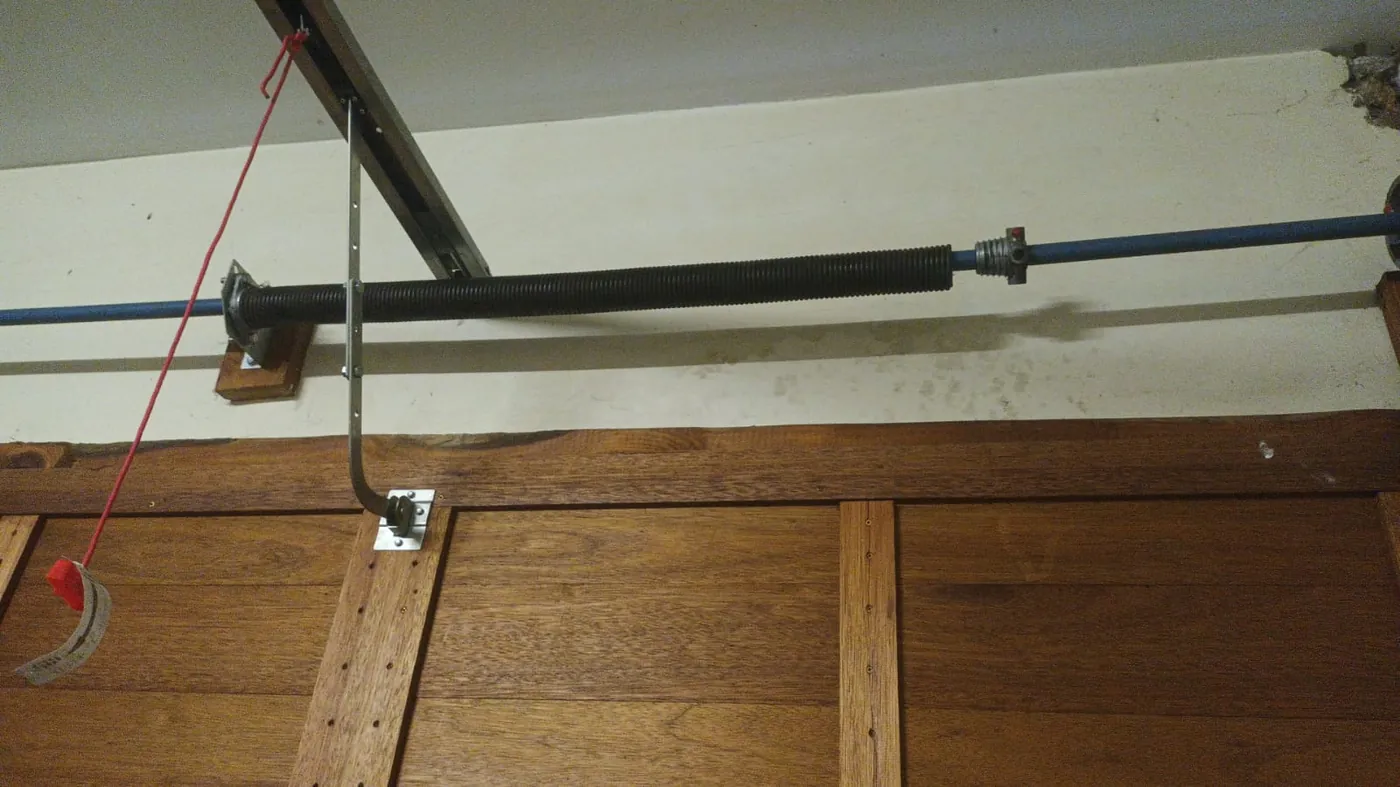
Torsion springs are normally mounted on or around a shaft above the door. As the shaft rotates, the spring system helps counterbalance the door through the cable-and-drum arrangement.
Stretch-and-return spring system
Tension springs change length as the door moves and work with cables and pulleys to assist with lifting. The complete spring, pulley and cable arrangement should be checked as one system.
Signs a garage door spring system needs attention
Spring problems can show up as a heavy door, uneven movement, unusual noise or a motor that suddenly struggles. These symptoms should be checked before continued use causes secondary damage.
A cracked or broken spring cannot be safely restored by welding, joining or patching it. The correct replacement spring or spring set must be fitted and the door balance checked afterwards.
We diagnose the complete counterbalance system
Spring problems often affect other parts of the door. We check the spring system together with the cables, drums or pulleys, shaft, bearings, brackets and door alignment before deciding what should be replaced.
Swipe left or right to view the full table.
| What you notice | What may be happening | What we inspect |
|---|---|---|
| Door is suddenly too heavy | Spring force may be lost because of a broken or badly weakened spring. | Spring condition, cables, shafts and overall door balance. |
| Door rises unevenly | Spring force or cable tension may not be equal on both sides. | Both sides of the lifting system, cables, drums or pulleys and door alignment. |
| Motor struggles | The opener may be carrying more door weight because the spring system is poorly balanced. | Manual door balance, spring condition and motor load symptoms. |
| Cable has come off | Spring, cable, drum or alignment problems may have changed cable tension or tracking. | Spring system, cables, drums, bottom brackets and shaft hardware. |
| Repeated spring or cable failure | The visible broken part may not be the original cause of the problem. | Door weight, spring matching, hardware condition and complete lifting geometry. |
The correct replacement spring must suit the door
Garage door springs should not be selected only because they look similar. The spring system needs to be suitable for the weight and movement of the specific door. A poor match can leave the door too heavy, too light or difficult to control.
Where more than one spring is used, we inspect the full spring set and the condition of the related lifting hardware. The goal is to restore a balanced system rather than simply replace the visibly broken component.
- Confirm the type of spring system fitted to the door.
- Assess the size, weight and construction of the garage door.
- Check whether the spring arrangement uses one or multiple springs.
- Inspect cables, cable drums or pulleys for related wear.
- Check shaft, bearing and bracket condition where applicable.
- Test the final door balance after replacement.
A spring replacement should restore more than just movement
A garage door can still move even when the spring system is poorly balanced. The more important question is how much effort is required and whether the door remains controlled through its travel.
Correct spring balance helps reduce unnecessary load on the motor and prevents other components from compensating for a weak or mismatched spring system. This is why we test the door after spring replacement instead of judging the job only by whether the door opens.
- Door should not feel excessively heavy when disconnected from the motor.
- Movement should be reasonably controlled rather than dropping or surging.
- Both sides of the door should move together.
- Cables should remain correctly seated and tensioned.
- The motor should not sound as if it is fighting the door's full weight.
How we approach garage door spring replacement
Our aim is to replace the failed spring correctly, restore a balanced lifting system and identify any related hardware problem that could cause another failure.
Inspect
We inspect the spring system, cables, shaft or pulleys and overall door condition.
Identify
We determine which spring system is fitted and what has failed or gone out of balance.
Match
The replacement spring or spring set is selected to suit the door and lifting arrangement.
Replace
The failed spring or spring set is replaced, and related lifting components are corrected where necessary.
Balance & test
We test the door movement, cable tracking and final balance before the job is considered complete.
Parts commonly checked with garage door springs
Spring faults often overlap with cable, drum, pulley and bracket problems. These components should be assessed together when the door is heavy, uneven or no longer balanced correctly.
Garage door spring FAQs
What do garage door springs do?
Garage door springs counterbalance the weight of the door so it can open and close with less effort and without forcing the motor to lift the full dead weight of the door.
What is the difference between torsion springs and tension springs?
Torsion springs normally work around a shaft above the door. Tension spring systems change length as the door moves and typically work with cables and pulleys.
How can I tell if a torsion spring is broken?
A visible gap in the spring coil, a suddenly heavy door or a door that will not lift normally can indicate a broken torsion spring.
Can I still use the motor if the spring is broken?
It is better to stop using the door. A broken spring can make the door extremely heavy and can place excessive load on the motor, cables and other hardware.
Can a weak spring damage a garage door motor?
A poorly balanced spring system can increase the load on the opener because the motor has to work harder to move the door.
Should other hardware be checked when a spring breaks?
Yes. Cables, drums or pulleys, bearings, brackets and the general door balance should be checked because spring failure can affect or reveal problems elsewhere in the lifting system.